
Mall Blitz
BRAINWORKS PUBLISHING PTE. LTD.Board
3.871.00 Reviews
- Version
- 1.6.8
- Installs
- 500.00K
- Age Rating
- Everyone
Screenshots
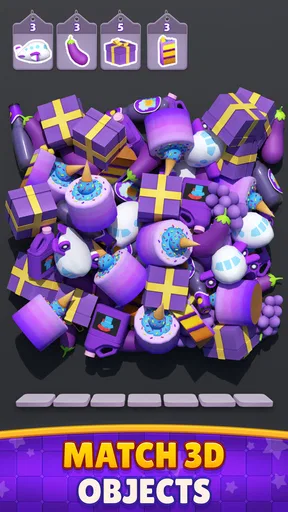
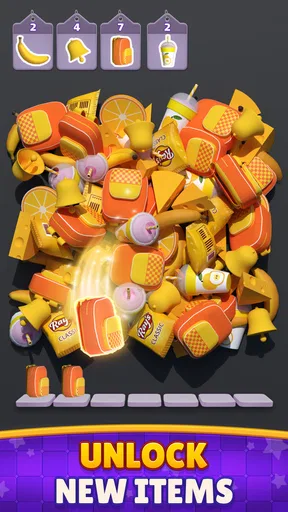
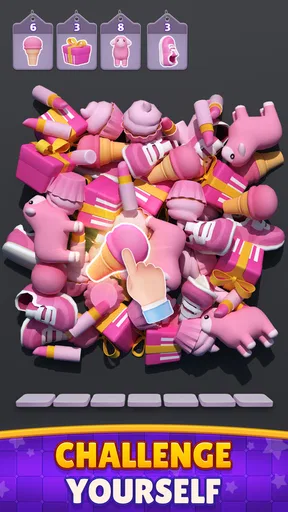
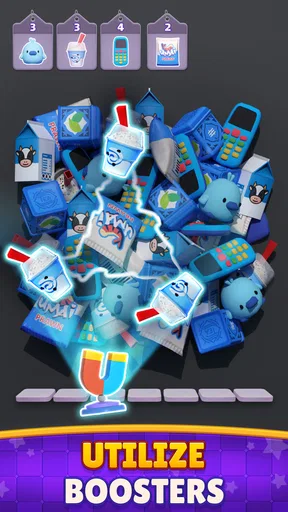

Our Review of Mall Blitz
 Analysis by Appyee
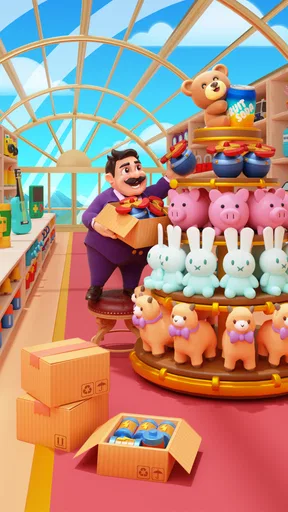
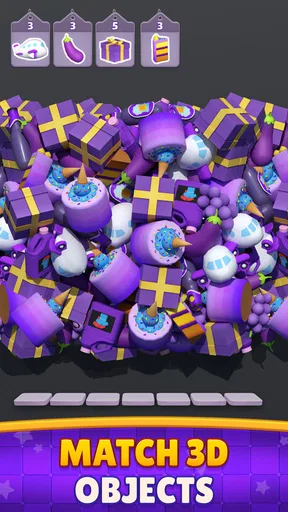
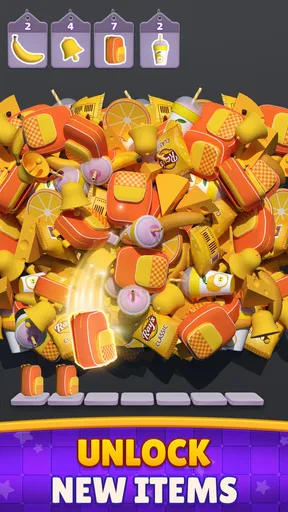
My first few rounds with Mall Blitz were easy to understand: I entered a bright supermarket-style board, looked for groups of three matching objects, and cleared them to satisfy the current order. That simple loop makes the game approachable within minutes, but the presentation gives it a more defined mood than a bare matching exercise. Shelves, shopping items, and the busy mall setting make each board feel like a small task inside a familiar place rather than an abstract grid.
This is a free board game from BRAINWORKS PUBLISHING PTE. LTD., aimed at Everyone and available for devices running Android 7.0 or later. It has passed the half-million-install mark, which makes it an easy game to encounter if you are browsing casual puzzle titles. Its average rating sits at 3.8 from roughly seven hundred ratings, so I would describe the reception as mixed but reasonably positive rather than universally enthusiastic.
What kept me playing was not a complicated rule set. It was the combination of quick recognition, small decisions, and the pleasant feeling of restoring order to a crowded shopping space. At the same time, the game is best understood as a light, repeatable distraction. If you want deep planning, a strong story, or a traditional competitive board-game experience, this is probably not where I would start.
A bright shopping world built around readable choices
I found that the supermarket setting does more than make the board look cheerful: familiar products give me a quick way to scan choices and spot useful groups. This section looks at how that visual clarity shapes the puzzle, while also considering when a busy display can slow a careful player down.
The first impression is deliberately friendly
The supermarket setting does useful work immediately. Matching fruit, packaged goods, and other shopping objects is more intuitive than matching anonymous colored shapes, because the items belong to a recognizable everyday world. I do not need a tutorial-heavy explanation to understand what I am looking for. The visual language tells me that the board is a shop, the objects are products, and clearing groups helps complete orders.
That clarity matters on a phone. Casual games often fail when their boards become visually noisy, especially when several objects have similar colors or silhouettes. Mall Blitz relies on the shopping theme to make the board feel lively, but the central task remains visible: scan, identify a trio, and decide whether to take it now or wait for a better arrangement. When the object designs are distinct, the game feels comfortable for short sessions and does not demand the concentration of a more demanding strategy title.
The setting also gives the game a gentle sense of purpose. I am not simply removing tiles for an abstract score. I am working through orders in a mall environment, which makes each completed match feel like progress through a small retail errand. That is a modest touch, but it helps the repeated loop avoid feeling completely detached from its theme.
How the art direction supports the puzzle
The strongest visual choice is the decision to keep the objects at the center of the experience. The supermarket idea is decorative, but it is not disconnected from the mechanics. Items are the puzzle language, and the store context makes the act of grouping them feel natural. This is more effective than placing the same mechanics in a generic fantasy landscape where the objects might have no relationship to the task.
I also like the contrast between a crowded shopping area and the neat outcome of a completed order. The board begins as a collection of possibilities. After a few successful groups, it becomes easier to see the remaining problem. That visual change reinforces the rhythm of planning and clearing, even when the underlying action is simple.
There is a trade-off here. A colorful retail setting can make objects look attractive, but attractive decoration can also compete with recognition. I found myself needing to slow down when several products shared a similar shape or palette. That is not a reason to reject the game, but it does mean that careful players will benefit from looking at the whole object rather than relying only on color.
The setting is best for short, familiar play
Mall Blitz fits naturally into moments when I want something active but not mentally exhausting. I can imagine playing it while waiting for an appointment, during a short commute as a passenger, or between household tasks. The supermarket theme is familiar enough that it does not require emotional investment, and the matching objective can be understood without remembering a complicated ruleset from a previous session.
That same familiarity limits the game for players who want a stronger identity. The mall is a pleasant frame, not a fully developed world that I explore through characters or narrative. The appeal comes from the board and its presentation, not from wondering what happens next in a story. I would recommend it to someone who enjoys cozy visual themes and compact puzzle sessions, but not to someone choosing a game mainly for world-building.
Sound and the feeling of forward motion
The audio presentation works best when it stays behind the actions. Matching three objects should feel clean and immediate, and the sound helps give those actions a sense of completion. Even without turning the game into a dramatic production, small audio responses can make a chain of successful choices feel more satisfying than silent taps.
What matters most to me is the relationship between sound and pacing. A match should confirm that I made the right move, while an order being fulfilled should feel like a larger step than an ordinary object disappearing. That hierarchy helps the game communicate progress without needing long explanations. The mall atmosphere remains light, and the audio supports that mood rather than pushing the experience toward tension or spectacle.
I would still treat the sound as optional depending on where I am playing. The game’s basic readability comes from the objects and board, so I do not need audio to understand the rules. In a quiet public place, I can play with the device muted and still follow the action. At home, sound makes the short sessions feel more complete, especially when I am playing several rounds in a row.
Why the rhythm works, and where it can slow down
The natural rhythm is a cycle of scanning, selecting, clearing, and reassessing. At the beginning of a board, I can make quick matches because the useful groups are easy to spot. As the available objects change, the pace becomes more deliberate. I need to consider whether an obvious trio is actually the best choice or whether another group will help complete the order more efficiently.
That change in tempo is important. If every move were equally obvious, the game would feel like repetitive tapping. If every move required lengthy analysis, it would lose its casual character. Mall Blitz sits between those extremes. Its most enjoyable moments come when I notice a useful sequence just before the board becomes awkward.
The weaker side of this rhythm is that repeated matching can become familiar quickly. Players who need constant novelty may find the core action too narrow. The game is not trying to replace a large strategy board game; it is offering a compact loop that can be repeated whenever a small mental break sounds appealing.
Matching is simple, but order management adds a useful decision
The central rule is straightforward: find three matching objects and use them to fulfill orders. The interesting part is not learning the rule but deciding how to apply it. A visible trio may be tempting, yet taking it immediately can change the remaining layout in a way that makes another order harder to complete. I learned to pause briefly before tapping the first obvious group.
That pause is one of the game’s more useful hidden lessons. I do not need to calculate several turns ahead like I would in a serious abstract board game, but I do benefit from checking the board for pairs, isolated objects, and items that appear central to several possible matches. In practice, this makes the game more thoughtful than a simple “tap any three” activity.
My most reliable approach was to scan in layers. First I looked for an exact trio that could be removed without disrupting other promising groups. Next I checked whether a pair was close to a third item. Finally I considered the order that seemed most constrained. This method reduced impulsive moves and made difficult boards feel more manageable without turning the game into a spreadsheet.
Small-session strategy is better than frantic tapping
One practical tip is to use the board’s quiet moments to prepare rather than immediately clear whatever looks convenient. If I saw two matching objects and knew the third was likely to become available after another move, I treated that pair as a future target. This was especially useful when the current order appeared to depend on a particular item type.
Another useful habit is to distinguish visual abundance from actual usefulness. A shelf full of similar products may look like an easy opportunity, but the best move is often the one that opens access to a less common object. The shopping theme encourages me to think in terms of shelves and stock, while the puzzle rewards attention to what remains blocked or isolated.
These choices are not advanced mechanics in the sense of a complex strategy system. They are small workflow improvements that make the existing rule more satisfying. For a casual game, that is enough. I feel that I am improving my observation rather than merely increasing my tapping speed.
Who will enjoy the mechanics
I would point this game toward players who like triple-match puzzles, visual sorting, and order-based tasks. It is also a reasonable choice for someone who wants a board game that can be understood by a family member without a long explanation. The Everyone content rating supports that broad accessibility, although individual preferences about bright visuals and repeated matching will still matter.
It is less suitable for someone who wants direct competition against other players, a campaign driven by character choices, or a board with the depth of chess, checkers, or a traditional tactical game. The category label may place it beside many board titles, but its actual experience is closer to a casual sorting puzzle than to a tabletop simulation. That distinction is important when deciding what to download.
Free to start, with a purchase range worth noticing
The game is free to download, which makes it easy to try without committing money first. It includes in-app purchases ranging from $4.99 to $99.99 per item. I would keep that range in mind before spending, especially if I tend to make impulse purchases during a difficult puzzle session. The free entry is attractive, but the presence of paid items means I would set a personal limit before playing regularly.
For me, the right way to approach it is as a free casual game first. I would play enough sessions to decide whether the supermarket theme and matching rhythm genuinely fit my habits. If the game becomes part of my daily downtime, I would still judge purchases by whether they solve a specific annoyance rather than buying automatically. That keeps the decision tied to my experience instead of the excitement of clearing a difficult moment.
The current release is version 1.6.8. That is useful to know when checking compatibility or comparing the experience with older impressions, particularly on a device that is not recent. Since Android 7.0 is the minimum operating system, owners of older supported phones may want to pay attention to how comfortably the board reads on a smaller screen.
Everyday use: a realistic ten-minute break
My ideal use case is a short break after finishing a task. I open the game expecting to play one or two boards, begin by looking for the least risky trio, and then continue if the board gives me an interesting sequence. The order system provides a clear reason to keep going, while the supermarket setting keeps the mood relaxed rather than intense.
That scenario also shows the game’s main limitation. If I am already tired of visual sorting, another round can feel like more of the same instead of a refreshing change. I would switch to a word puzzle when I wanted language-based thinking, or to a traditional board game when I wanted deeper planning and stronger competition. Mall Blitz earns its place when I want a quick visual task, not when I want variety from every session.
What separates it from ordinary matching alternatives
Compared with a basic match-three game built around swapping pieces, this experience puts more emphasis on identifying groups of three objects in a shopping environment and using them for orders. That changes the mental texture. I am not only searching for a line or a chain; I am also considering which products serve the current task and how a move affects what I can see next.
Compared with classic board games, however, it offers less social and strategic depth. There is no reason to expect the long-term planning or opponent-reading that makes traditional tabletop titles compelling. Its advantage is convenience: the rules are quick to grasp, the visual theme is friendly, and the session can remain compact.
Compared with other casual triple-matching games, the mall identity is the main differentiator I noticed. Shopping objects make the board more concrete, and fulfilling orders gives the actions a small narrative frame. That will appeal to players who prefer everyday settings over jewels, candies, or abstract symbols. It will not matter much to players who care only about the efficiency of the puzzle system.
The friction points I would consider before installing
The biggest concern is repetition. The basic pleasure comes from spotting and clearing groups, so anyone who needs a constantly changing rule set may lose interest. The visual busyness of a retail board can also make recognition slower, particularly when products share colors or shapes. I found that taking an extra second to inspect the object itself was more reliable than making fast color-based decisions.
The purchase range is another consideration. Because the game is free to start but offers paid items, it is better suited to players who are comfortable ignoring optional spending or managing it carefully. I would not recommend it to someone who knows that difficult levels and convenience purchases tend to lead to unplanned spending.
Finally, the atmosphere is cheerful rather than dramatic. There is no strong emotional hook beyond the satisfaction of completing orders and tidying the board. That is a strength for relaxing play, but a weakness if I want suspense, humor, or a story that develops over time.
My final view of the playable mood
Mall Blitz succeeds when its art direction, setting, sound, and pacing all point toward the same promise: a light shopping-themed puzzle that I can pick up quickly and leave without a heavy commitment. The mall environment is not just a backdrop; it gives the objects a reason to exist and makes the order-based goal easier to understand. The sound and visual feedback support the rhythm of scanning and clearing, while the gradual need to choose better groups prevents the activity from being completely mindless.
I especially recommend it to someone who enjoys casual board-style puzzles, likes familiar everyday themes, and wants a free game for short breaks. I would skip it in favor of a deeper strategy title if I wanted long-term planning, or choose a different puzzle category if I had already grown tired of matching objects. The best way to play is patiently: inspect the whole board, protect useful pairs, and prioritize the order that looks hardest to assemble.
As a free release from BRAINWORKS PUBLISHING PTE. LTD., it offers an accessible starting point and a coherent mood rather than an ambitious reinvention of the genre. With a 3.8 average and over 500K installs, it has enough visibility to justify a trial, but those figures should not replace personal testing. My honest recommendation is to download it if a colorful supermarket setting and measured triple matching sound appealing. For a quick, tidy mental break, the game’s strongest feature is the way its presentation makes a simple rule feel like a small everyday mission.
Verdict
Strengths of Mall Blitz
- Fast match-3 rounds are ideal for short gaming sessions.
- Shop upgrades give each level a clear sense of progression.
- Bright visuals and playful animations make the game inviting.
- Simple controls are easy for new players to understand.
- Different mall areas add variety beyond the basic puzzles.
Limitations of Mall Blitz
- Later levels can feel repetitive once the core mechanics become familiar.
- Limited moves may make some stages heavily dependent on luck.
- Boosters can become important when tackling difficult challenges.
- Frequent rewards may interrupt the flow of regular gameplay.
- Offline availability may be limited for some features or events.
Other Releases by BRAINWORKS PUBLISHING PTE. LTD.
View All
NumMatch: Number Logic Puzzles
Board4.5

Hole Em All: Black Hole Games
Puzzle4.8

HoleCraft - Black Hole 3D Game
Action4.5

Find Triple Ball: Match Triple
Board4.6
Similar Picks in This Category
View All
Ludo King®
Gametion4.1

Ludo
Yarsa Games4.6

Tile Master® - Matching Game
Higgs Studio3.6

Checkers Online
CC Games4.6

Dominoes
Loop Games4.7

Chess
Chess Prince4.6
Frequently Asked Questions
What is Mall Blitz and how does the gameplay work?
Mall Blitz is a fast-paced shopping and management game centered around building, expanding, and improving your own mall. Players typically arrange stores, attract customers, manage resources, and complete objectives while the mall becomes busier and more profitable. The experience combines casual strategy, progression, and time-based challenges, making it easy to start but increasingly demanding as new areas and upgrades become available.
Can Mall Blitz be played offline?
Mall Blitz may allow some basic gameplay without a continuous internet connection, depending on the device version and the specific feature being used. However, online access is commonly required for advertisements, cloud synchronization, updates, events, leaderboards, or purchases. If you plan to play while traveling, it is best to launch the game while connected first and check which functions remain available when your device is offline.
Is Mall Blitz free to download and play?
Mall Blitz is generally available as a free download, but it may include optional in-app purchases and advertising. These purchases can sometimes provide extra currency, boosters, faster progress, or cosmetic improvements. You can usually play without spending money, although progression may take longer and certain offers may appear regularly. Review the store listing and your device’s purchase settings before allowing children to play.
Does Mall Blitz contain advertisements or in-app purchases?
Players should expect Mall Blitz to potentially include both advertisements and optional in-app purchases, as these are common monetization methods in casual mobile games. Ads may offer rewards such as coins, energy, or temporary bonuses, while purchases can remove waiting periods or provide additional resources. The frequency and availability of these features can change after updates, so check the current store description and privacy information.
What devices and permissions are required to play Mall Blitz?
Before downloading Mall Blitz, check that your Android or iOS device meets the current operating-system and storage requirements shown on the official app store page. The game may also require a stable internet connection for certain content and enough free space for updates. Review requested permissions carefully, particularly access related to notifications, advertising, analytics, or account services, and only enable permissions you are comfortable granting.
Play our best games!


